Why Your Aftermarket Brand Needs Employee Influencers on LinkedIn
Build LinkedIn employee advocacy for your aftermarket brand with Madre’s BICEP and SCOPE frameworks, creating authentic content that drives enquiries.

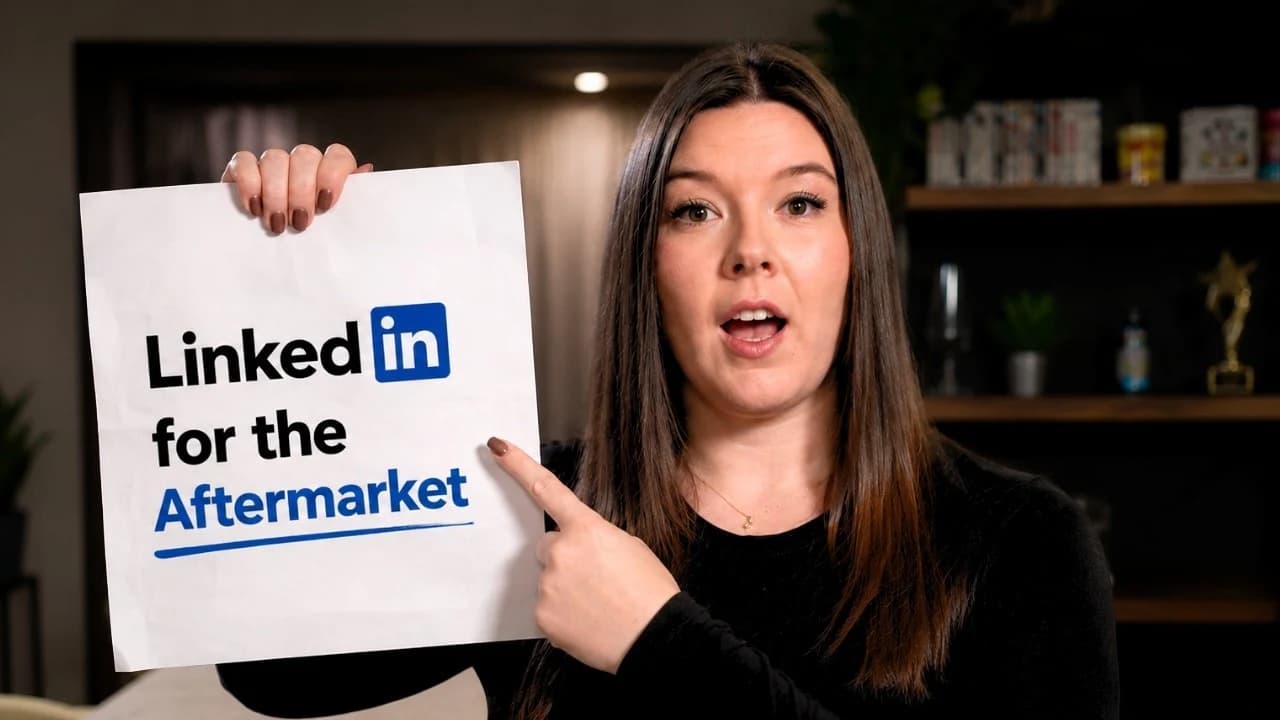
LinkedIn employee advocacy works best when you prioritise personal profiles, get your team’s buy-in and make each person’s content different. Use BICEP (Brand, Interests, Credibility, Evidence, Personal lens) to build each profile and SCOPE to write posts that stop the scroll, then connect everything to a wider sales funnel.
If you’re a B2B aftermarket supplier, I bet you’ve thought about LinkedIn and how to drive revenue for your business. But a lot of the questions we get are around how to actually implement that.
I’m going to show you step by step how to use your employees as LinkedIn influencers in order to generate revenue for your business. This is often referred to as LinkedIn employee advocacy.
The opportunity for aftermarket brands on LinkedIn
The first thing we need to talk about is the opportunity. LinkedIn is popping off right now, and there are a lot of people who spend their time watching what’s going on in their feed rather than posting themselves.
In March 2026, LinkedIn explained how its feed recommends relevant professional content, including content from people you haven’t connected with before. So, if you’re consistently putting useful content out there, you’ve got the opportunity to get in front of people who aren’t already following you or your business.
1. Prioritise personal LinkedIn profiles
The first thing you must know about LinkedIn is the company page versus the personal profile. Company pages can definitely work, but at Madre we’ve seen more effective conversions through personal profiles.
The different networks your employees have allow you to diversify the audience you’re reaching without having to get every person to follow your company page, which can be much harder to do.
I’ve gone into how we use LinkedIn as part of a wider aftermarket marketing strategy in my guide to automotive social media marketing.
2. Get buy-in from your employees
Not every employee is going to want to be a LinkedIn influencer. It’s really important that we speak to the sales team, the marketing team and the leadership team and see who actually wants to create these LinkedIn posts.
Once you actually have your employees’ buy-in, how do you create high-performing posts? If you’re creating the content but nobody wants to read it, you’re not going to generate anything from LinkedIn.
3. Build individual employee profiles using the BICEP framework
The framework we like to run with our clients is called BICEP. This allows us to build an individual profile for each employee so that the content they’re putting out actually sounds like them.
B: Brand
Although it’s a personal page, we obviously want your brand’s core values to show throughout the LinkedIn posts. Map those out and make sure that when you’re creating this content, you have that lens on the posts.
I: Interests
What makes this person different? What are their interests? What are they into? We can then talk about these things in their LinkedIn posts to create stories.
C: Credibility
What exactly does this employee want to be known for? Is it as a leading diagnostics person in their field? Is it for their expertise in ADAS? Whatever it is, we need to map that credibility and the social proof as to why they actually are that person.
E: Evidence
Whatever they want to be known for, we need to back that up with social proof, stories and authority, so the person the reader is actually listening to is credible.
P: Personal lens
What’s their story? What are the things you can move into their social posts that create that personalisation and help readers get to know, like and trust the employee?
4. Make every employee’s LinkedIn content different
Once we’ve plotted out the BICEP framework, we have individual profiles for our employees that are going to differentiate the content.
The worst thing you can do is have a load of employees post the same thing. It’s monotonous, it’s boring, and we know it didn’t come from their personal profile. Making these nuanced changes is how you’re going to sound authentic.
For example, we had an aftermarket business talk to us about how they’d tried to use a PR agency to create LinkedIn posts. Unfortunately, that mentality wasn’t quite what worked for them on LinkedIn.
It shouldn’t be about how you can brag to the person. Instead, it’s about what value you can bring with this post from your personal lens, so the reader knows you’re credible enough to talk about it.
5. Write your LinkedIn posts using the SCOPE framework
For any post on LinkedIn, we use the SCOPE framework. This is where we take the employee’s individual profile and actually turn it into a post.
S: Stop the scroll
This is the hook we use, usually one or two lines, that’s going to hook somebody in so they’re actually viewing the post. It shouldn’t be a cliffhanger where the reader has no idea what the rest of the post is going to be talking about. Make sure the context is correct.
C: Contextual story
This is where BICEP really comes in. It means we can create a story around the pain points of the customer that’s contextual to the employee. This elevates our LinkedIn content and positions the employee as somebody who has actually done the things they’re talking about.
O: Outcome or observation
This is where the employee explains the outcome of the story, whether that was your solution or an observation on how to improve the situation or come out of that pain point.
P: Prompt
This is a call to action. Now, not every post on a personal LinkedIn profile needs to have a call to action.
If you do put a prompt into your post, one could be a genuine question, one could invite a relevant comment, or one could direct someone to a landing page when it’s more sales-focused.
E: Exhibit
This is where you want to put an image or a graphic. What we’ve seen work really well is kind of scrappier images, maybe a selfie or something caught in the act. Nothing too professional, just keeping it casual and real. This is what we’ve found works best for us.
6. Connect your LinkedIn employee advocacy strategy to a sales funnel
When you use BICEP and SCOPE together with your team’s buy-in, you can create LinkedIn content that’s designed to generate revenue. But the main thing you need to do is map this to a wider funnel.
The funnel essentially has landing pages and lead magnets that get you your customers’ details, with the appropriate permissions, as well as a way for them to book in for the sale.
We’ve detailed how to set up this funnel so your employees aren’t faffing around trying to book calls on Calendly, but can instead plug their LinkedIn profile into your wider marketing campaigns. You can watch our step-by-step guide to the social media funnel.
If you’re an aftermarket supplier looking to generate revenue through your employees’ expertise on LinkedIn, you can find out more about our social media marketing services or get in touch with us at Madre.
Frequently asked questions
Why focus on personal LinkedIn profiles instead of a company page?
Company pages can work, but at Madre we’ve seen more effective conversions through personal profiles. Your employees’ different networks let you reach a wider audience without needing everyone to follow your company page. LinkedIn’s feed can also show useful content to people who aren’t connected with you yet.
What is the BICEP framework?
BICEP is how we build each employee’s LinkedIn profile. It covers Brand, so your core values show through; Interests, which make the person different; Credibility, or what they want to be known for; Evidence, the proof that backs it up; and Personal lens, the story that helps readers know, like and trust them.
What is the SCOPE framework for LinkedIn posts?
SCOPE is how we structure LinkedIn posts. Stop the scroll with a one or two line hook, tell a Contextual story around a customer pain point, share the Outcome or observation, add a Prompt where it makes sense, and finish with an Exhibit, ideally a casual, real image such as a selfie.

Work with Madre
Where could your digital marketing work harder?
Book your free V8 Digital Audit and we will show you where your social, search, site and sales can work harder for your aftermarket brand.
Book your free V8 Digital Audit