Why Your Content Gets No Reach: How Social Media Algorithms Actually Work
Understand six signals behind social media algorithms and why your content gets low reach across YouTube, Facebook, Instagram, TikTok and LinkedIn.

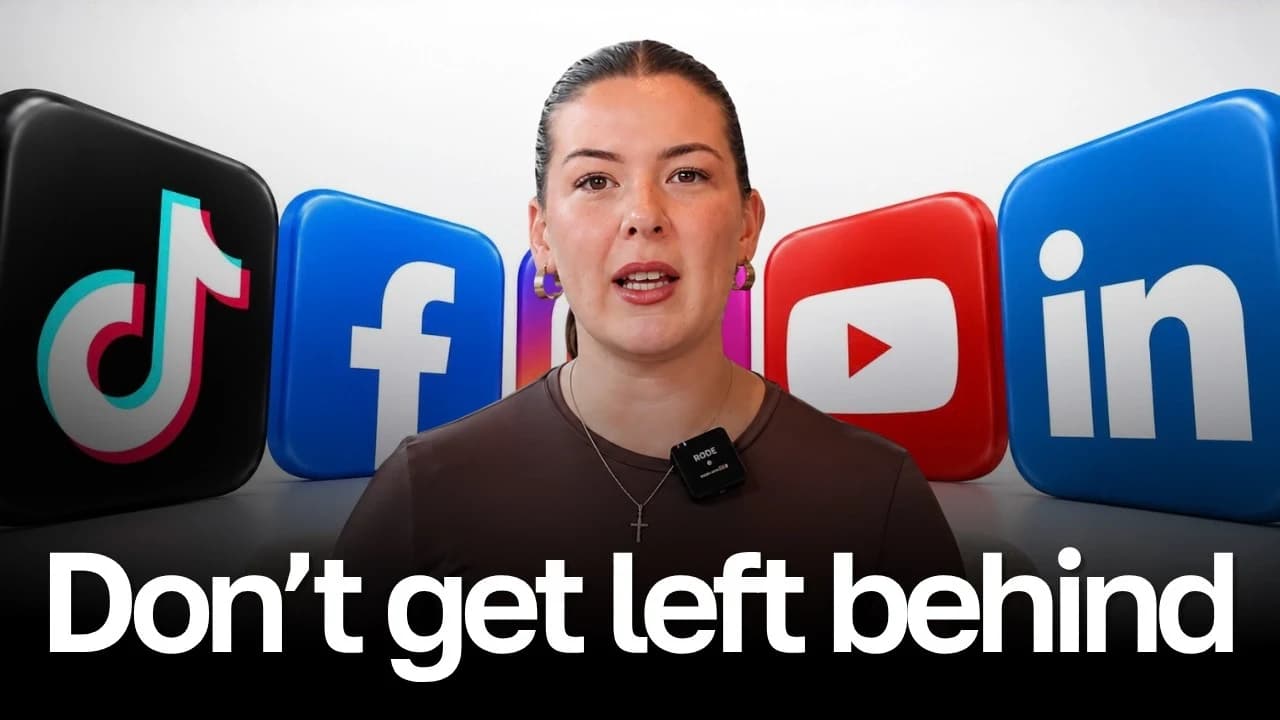
Social media platforms distribute B2B content based on how viewers respond to it rather than follower counts alone. Across YouTube, Meta, TikTok and LinkedIn, six signals matter most: relevance to the audience, stopping power, continued consumption, viewer satisfaction, genuine originality and meaningful engagement over recycled or automated activity.
If your content isn’t getting any traction, it can be very easy to blame the algorithm.
But social media platforms aren’t just sitting there deciding which businesses deserve the most reach. They’re trying to work out if people are actually interested in what you’ve made.
Once you understand what they’re looking for, content becomes a lot less random. You can start looking at an idea, even before you’ve started writing or filming it, and understand where it might fall apart.
I’ve gone through exactly what YouTube, Meta, TikTok and LinkedIn say about how they recommend and distribute your content, and compared that with what we’re actually seeing on the ground at Madre, through the thousands of pieces of content we’ve created and published.
When you put all of these platforms next to each other, they’re very different. But what’s interesting is that the same signals keep coming up again and again.
I’m going to walk you through what those signals are, what they mean for the content you’re creating and how to use them to make much more deliberate decisions about what you post as a business.
How do social media algorithms work?
The easiest way to understand how social media algorithms work is to understand how they originally started and where they’ve ended up today.
Originally, social media was largely based on your network and the recency of their posts.
Essentially, if you followed somebody and they’d posted recently, you would see that post.
The question social media platforms were asking back then was:
Who do you follow, and what have they posted most recently?
That’s very different from how they work today.
Now, they don’t just look at who you’ve chosen to follow. They also look at things like:
- What you watch.
- What you skip or scroll past.
- What you click on.
- What you interact with.
- How long you stay.
- What you come back to.
They use all of this behaviour to try and predict what you want to watch next, which in turn helps keep you on the platform.
There’s also a commercial reason for this. The longer they have your attention, the more opportunities they have to sell advertising space.
But keeping you on the platform isn’t just about getting you to watch something for as long as possible. The platforms also want to understand whether you’re satisfied with the content you’re consuming and whether you’re likely to come back.
What does this mean for businesses posting on social media?
This changes the opportunity for your business quite significantly because your content is no longer limited to the people who follow you.
The platforms can take a piece of content and put it in front of people who are interested in that topic, even if they’ve never heard of your business before.
That means the audience seeing your content could be much more likely to engage with it.
But for platforms to keep distributing your content to relevant people, we need to understand what they’re actually looking for.
The six signals behind social media algorithms
When we look at the information published by the major social media platforms, there are six common themes that I’d consider when creating content.
|
Signal |
What to consider |
|---|---|
|
Relevance |
Is this content relevant to the person seeing it? |
|
Attention or appeal |
Will they choose to consume it? |
|
Continued consumption |
Will they stay and come back for more? |
|
Satisfaction and value |
Did they actually get something from it? |
|
Originality and unique perspective |
Are you giving them something they can’t get elsewhere? |
|
Meaningful behaviour |
Are people genuinely engaging with your content? |
These are the six signals I would use to assess the content you’re creating. Each platform has its own recommendation systems, but the principles are remarkably similar.
1. Relevance: Is your content relevant to the person seeing it?
Relevance is probably one of the most important places to start because each of the platforms talks about some version of this.
- YouTube aims to recommend content suited to each individual viewer.
- TikTok personalises its For You feed based on individual interests and interactions.
- Meta uses predictions about which content people are likely to find valuable.
- LinkedIn uses information from your profile and previous activity to recommend professionally relevant content.
I think the most important word across every single platform is you.
The content needs to be relevant to a particular person. Being relevant to an industry in general isn’t necessarily enough.
And this is where a lot of businesses get it completely wrong.
When it comes to social media, we decide what we want to talk about based on what we want to sell, what we want people to know about the business and what we happen to be doing that month.
But the algorithms aren’t looking at what’s most relevant to your KPIs. They’re thinking about what’s most relevant to the users on their platform.
Understand who you’re creating content for
Before we create anything, there are a few questions I’d want answered:
- Who exactly are we talking to?
- Why would this particular subject matter to them?
- What are the points we absolutely need to hit for this to be the most useful piece of content?
- When they finish consuming it, what value have they actually got from it?
- What’s the outcome?
You don’t have to guess at that.
There are a few easy ways you can figure out what your audience is actually searching for or talking about.
Research what your customers actually care about
The first one is keyword research.
Look at things like YouTube searches, Google search data, Google Trends and the questions appearing around these topics.
Look at forums, Facebook groups, Reddit, support tickets and sales conversations.
What are your customers actually talking about?
When you’re doing your research, you’re looking for the language they actually use, the things they keep continuously asking you and what they’re spending their time trying to resolve.
Rather than asking what we should post, I’d ask:
What does my specific customer persona actually care about?
The better you understand that person and their situation, the better equipped you are to create content that the platforms can match to the right audience.
If you haven’t already developed your customer personas, I’ve made a full video explaining the six questions we use to build customer personas at Madre.
But being relevant is only the beginning. People still have to choose to consume your content.
2. Attention or appeal: Will somebody stop and consume your content?
For me, this is probably one of the most important parts of creating any piece of content.
None of the other signals really matter if nobody chooses to consume your content in the first place.
Attention or appeal can start at different points depending on the platform you’re on.
What gets people’s attention on different social media platforms?
|
Platform |
Where you need to earn attention |
|---|---|
|
YouTube |
Your title and thumbnail. |
|
TikTok |
The opening seconds of your video. |
|
Instagram and Facebook Reels |
The opening visuals and hook. |
|
|
The first few lines of your post. |
On YouTube, it’s your packaging.
When YouTube recommends a video, one of the things it looks at is whether somebody chooses to watch it, ignores it or tells YouTube they’re not interested.
The job of your title and thumbnail is essentially to get that person to click on your video rather than the other ones on their feed.
On TikTok or Reels, you don’t necessarily get the luxury of having that packaging. Instead, it’s the first second of your video that can convince somebody whether or not they should scroll away.
On LinkedIn, it’s often those first few lines that make you want to click ‘see more’.
All of these platforms look different, but the principle is the same.
Why should I actually give this my attention?
Give people a reason to stop scrolling
This is one of the biggest mistakes I see with content in the automotive aftermarket and B2B businesses in general.
They have the topic. They understand what they’re talking about. But they don’t actually stop for a second and think about why somebody would want to stop and consume that piece of content.
I’d argue that this is where you should be spending 80% of your creative effort, because getting that first click or stopping somebody from scrolling is one of the hardest parts of content creation.
This is where attention and relevance work together.
If you deeply understand the person you’re trying to target, you should already know what they care about, what problem they’re trying to solve, what outcome they want and what information is actually valuable to them.
Your job at the beginning of that content is to surface that value and show them it as quickly as possible.
Example: Creating content about automotive battery testing
Instead of opening a video with:
Today we’re going to talk about battery testing.
You might lead with the actual problem:
Your customer’s battery could pass a voltage test today, but eight weeks down the line, they could still have a flat battery and be left stranded.
These are the same subjects, but they give the viewer completely different reasons to keep watching.
Equally, instead of starting your LinkedIn post with I’m excited to announce, start it with the part that actually matters most to the person reading it.
If someone sees the first second, the thumbnail or the first two lines and thinks, That’s relevant to me. I want to know what happens next, you’ve earned yourself the opportunity for the rest of the content to do its job.
And the platforms are learning from that behaviour.
If people don’t stop, don’t click or immediately move on, you’re giving those platforms information about how appealing that content was to the audience it was shown to.
Before I publish anything, I want to know:
- What’s the reason somebody would stop?
- What value am I actually promising them?
- Have I made that obvious immediately?
Getting their attention is only the first hurdle. Once you’ve got it, you have to keep it.
3. Continued consumption: Will your audience keep watching and come back for more?
I think there are two parts to this continued consumption signal.
The first one is quite obvious.
Once someone starts consuming your content, do they actually stay?
YouTube looks at how long and how much of a video people watch. TikTok considers things like watch time, completed views and skips. Instagram gives you retention data for video content, and LinkedIn has spoken about using dwell time, which is how much time somebody spends on a particular post.
But I think there’s another part to this signal that’s just as important.
When that person sees that your brand has put out another piece of content, do they choose to consume it based on the fact that you previously gave them value?
Every piece of content sets expectations for the next one
If I click on your video because you’ve promised something useful and then you spend 10 minutes going around in circles, I’m going to remember that.
The next time your thumbnail appears or you come up on my feed, I’m less likely to consume your content.
But if I watch your video and think, Wow, that genuinely helped me, you’ve now started to build an association between your brand and value.
The next time I see you, I actually have a reason to give you my attention and time.
We see this reflected in how the platforms work.
YouTube takes previous viewing behaviour into account when recommending content, and regularly returning viewers can help a channel build a stronger relationship with its audience.
TikTok also recommends looking at what your audience is engaging with to help inform the content you create next.
Continued consumption is about more than whether somebody watched your video, spent time on your post or watched your Reel all the way through.
When I’m recommended your content the next time, am I more likely to watch or scroll away?
Deliver on the promise you made in your hook
The concept of this is really easy.
If you want to improve continued consumption, you need to ensure that you’ve delivered on the value you promised during the attention stage.
Don’t hook somebody in with one thing and then give them something completely different.
Don’t artificially drag an answer out just because you’ve heard that more watch time equals more results.
And definitely don’t spend five minutes going around in circles when you could have delivered the value in 30 seconds.
With any individual piece of content, there are frameworks and techniques you can use to keep that consumption going.
At Madre, we have three main frameworks: SPARK, BREAK and SCOPE.
These look at how to create a post, how to create a hook and how to write a successful video script.
When you apply frameworks to the content you’re creating, spend time making sure the packaging is correct and then deliver on that promise, you’re doing a lot of the work needed to keep people engaged.
Get people to consume more of your content
There’s another thing I’d be thinking about.
Where do people go once they’ve consumed that piece of content?
How do you actually make them continue to consume more of your content?
On YouTube, for example, you never want to treat the end of a video like it’s the end of the customer’s journey.
Instead, use an end screen that recommends another video relevant to the topic you’re currently talking about.
On TikTok and other short-form video platforms, you could create episodic or series-based content so people can watch part one, part two or different episodes of a single series.
Continued consumption is about earning that next bit of attention.
The next second, the next section, the next post, the next video.
And the foundation underneath all of that is the same.
Did the thing they just watched deliver enough value that they’re willing to give you more of their time?
I’ve gone into this in more detail in my video on five reasons your YouTube videos are getting low views.
4. Satisfaction and value: Did your audience actually get something from your content?
Consuming a piece of content isn’t the equivalent of liking it and wanting more of it.
You need to be satisfied with the value and outcome you got from that video.
For example, if I watch a video that’s a bit gory and I literally cannot take my eyes away from it, that doesn’t mean I enjoyed it, got value from it or was satisfied with my experience.
It doesn’t necessarily mean I want more of that content on my timeline.
Pairing continued consumption with satisfaction and value is hugely important.
YouTube is particularly explicit about this. Its recommendation system considers whether viewers choose to watch a piece of content, stay watching and are satisfied afterwards.
You’ll notice YouTube sometimes gives you surveys to understand whether or not you were satisfied with a piece of content.
Meta has done something similar, surveying users about the value they got from content.
LinkedIn talks about surfacing content that gives people useful knowledge, insights and information to help them professionally.
This is where we shift from How long will they stay? to Did they actually get anything from this piece of content?
How do you measure audience satisfaction?
The difficult thing with viewer satisfaction is that you’re not necessarily going to get a figure in your analytics that says 82% viewer satisfaction, for example.
Instead, you have to look at a few different behaviours.
What happened after somebody consumed your content?
- Did they come back and watch you again?
- Did they subscribe or follow?
- Did they click through to another video?
- Did they save the post because they wanted to come back to it?
- Did they send it to somebody?
- Did they share it?
These behaviours start to tell you much more about whether or not somebody found your content valuable.
On YouTube, for example, one of the things I’d be looking at is returning viewers.
If somebody watches one of your videos and then chooses to come back for more, that’s a good indication that they found enough value in your previous content to give you their attention again.
The difference between retention and satisfaction
Retention and satisfaction are things I would look at separately.
|
Metric |
What it helps you understand |
|---|---|
|
Retention |
How long people stayed and which parts of the content held their attention. |
|
Satisfaction |
Whether people found enough value in the content to engage with it, recommend it or come back for more. |
One of the ways you can give people more value is through original content.
5. Originality and unique perspective: What are you giving people that they can’t get elsewhere?
Originality has become a lot more explicit across social media platforms.
TikTok has spoken about the importance of content that reflects the creator’s own perspective.
Meta is actively prioritising original creators on Facebook and reducing distribution for unoriginal or low-value duplicated content.
LinkedIn has also said it wants to show more genuine insights, actionable ideas and thoughtful perspectives, whilst reducing generic and recycled content.
I think it’s important here to define what original content actually means.
It doesn’t necessarily mean you need to create something completely different for every single platform. You can repurpose your own content.
What’s important is the perspective you’re bringing to that content.
Even if you’re talking about somebody else’s idea or covering an industry event, your perspective and your unique thought process should be applied to it.
Get your business’s expertise into your content
This is why understanding your customer’s questions and gathering information from the people within your business is so important.
Your sales team, technical team and leadership team will have their own perspectives based on conversations they’ve had and problems they’ve actually solved.
That gives you something original to talk about.
It’s also why, when we create content for automotive aftermarket businesses at Madre, we’re big believers in documenting the expertise that’s already within your business.
But even when businesses are creating original and valuable content, they still sometimes try to manufacture their engagement.
6. Meaningful behaviour: Are people genuinely engaging with your content?
Businesses can get a little too obsessed with engagement, to the point of joining LinkedIn engagement pods, buying YouTube subscribers or purchasing followers.
But platforms are cracking down on these practices.
TikTok looks at a combination of behaviours from users, including whether they’ve actually watched the video and how they’ve interacted with it.
YouTube also looks at viewing behaviour and other indicators of how people respond to the content.
LinkedIn looks at comments, likes and consumption behaviour, and has explicitly announced measures to combat engagement pods and automated comments.
Meta also works to reduce the distribution of low-quality and spammy content.
What the platforms are trying to work out is whether this piece of content actually serves a purpose for the person seeing it.
Does this person actually like it?
Focus on creating content people want to engage with
The crux of the matter with engagement is that if you create genuinely good content, following the principles we’ve gone through, you give people a reason to engage with you naturally.
You can start to develop an audience that wants to follow you, wants to engage with your content and becomes fans of the pages you’re promoting.
Manufactured engagement is a cheap way of trying to make your business look successful.
Instead, think about the content, how it genuinely serves the person, getting them to consume it in the first place and then giving them a reason to stick around.
That’s how I’d approach creating great content for your brand.
Social media content checklist: What to check before publishing
Before you publish your next piece of content, ask yourself these six questions.
|
Signal |
Question to ask |
|---|---|
|
Relevance |
Who exactly is this for, and why does it matter to them? |
|
Attention |
Why would somebody stop scrolling or click on this? |
|
Continued consumption |
Have I given them a reason to stay and consume more? |
|
Satisfaction |
What value have they actually got from this? |
|
Originality |
Have I included our own expertise and unique perspective? |
|
Meaningful engagement |
Have I given people a genuine reason to engage? |
If you take anything away from this article, it’s that the algorithm isn’t some completely unknowable black box.
You can see from the first signal all the way to the final one that each of these builds on top of the others.
When you use these signals to inform the content you’re creating, you’re giving your audience more reasons to consume it and giving the platforms more information about who might find it valuable.
Frequently asked questions
Why does B2B aftermarket content get low organic reach on social media?
Organic reach often stays low when content gives people little reason to stop scrolling, watch or read. Generic company announcements and broad industry posts can struggle to engage specific buyers. Social platforms look at how people respond to content, so focus on topics that are relevant to your customers’ daily work.
What is the difference between retention and satisfaction on social media?
Retention measures how long people spend watching or reading your content and which parts hold their attention. Satisfaction reflects whether they found enough value to engage, recommend it or return for more. Platforms also assess satisfaction through surveys and behaviour such as saving, sharing and returning to watch further content.
Do social media platforms penalise engagement pods or duplicated B2B posts?
Yes. In March 2026, Meta announced that Facebook would prioritise original creators and reduce distribution for low-value duplicated content. LinkedIn’s 2026 updates also addressed engagement pods, automated comments and generic recycled posts, favouring genuine professional insights. You can still repurpose your own content while bringing your own perspective to it.
How do you turn social media reach into revenue?
Attention doesn’t always make you money.
Once somebody has actually found you, how do you move that into a sales conversation?
Once they’ve consumed your content, they need somewhere to go to actively engage with your brand.
That could be your website, an enquiry form, a relevant landing page or a conversation with your sales team.
But a lot of the B2B websites we see don’t convert. They don’t give customers the information or value they need to move to the next step.
So now you know how to create your content, let’s sort your website.
I’ve gone into this in my video explaining five reasons your website is losing leads.
If you’re an automotive aftermarket business struggling to get reach, engagement or revenue through social media, you can learn more about our social media marketing services at Madre.

Work with Madre
Where could your digital marketing work harder?
Book your free V8 Digital Audit and we will show you where your social, search, site and sales can work harder for your aftermarket brand.
Book your free V8 Digital Audit