SEO vs Social Media vs Paid Advertising: Which One Actually Works?
SEO, social media or paid advertising? Understand which marketing channels generate demand, build trust, nurture prospects and convert customers.

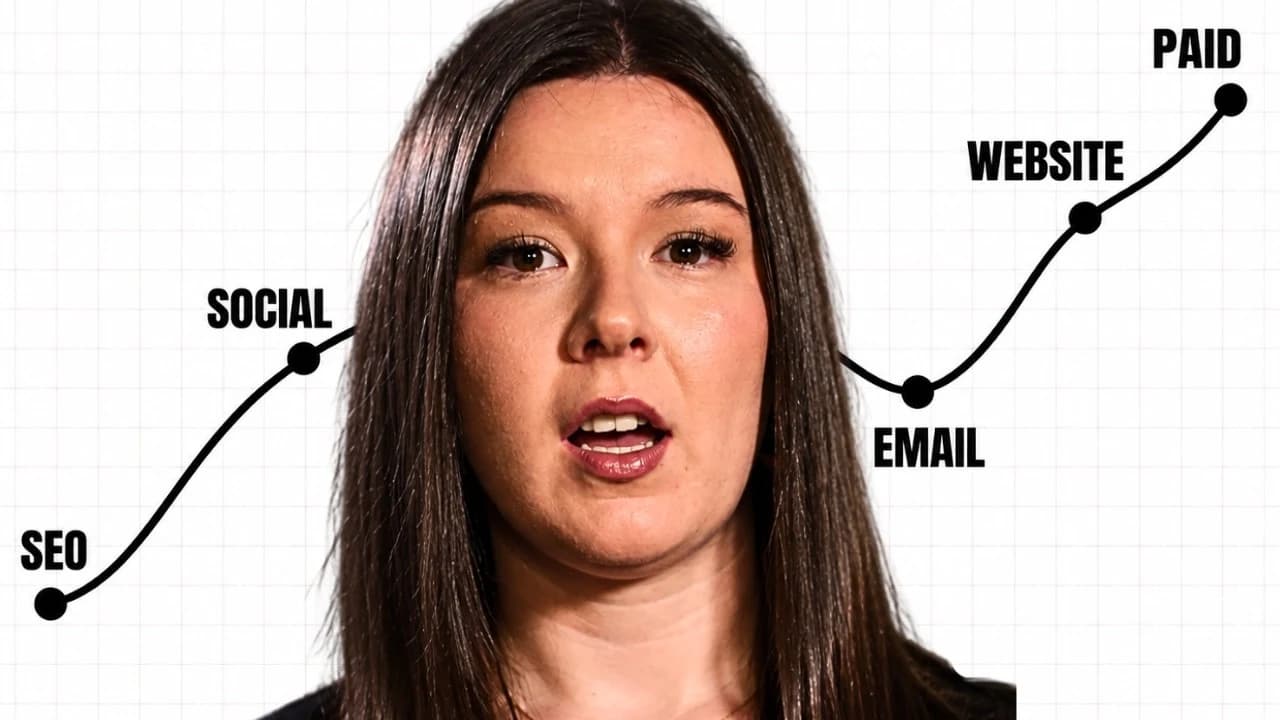
SEO, organic social media and paid advertising each do a different job in B2B automotive marketing. Organic social creates demand, long-form YouTube builds technical trust, SEO captures buyers already searching, email and website pages convert enquiries, and paid advertising scales content and pages that have already proved effective.
Most B2B automotive aftermarket brands are dabbling in multiple different marketing channels, such as SEO, email, social media and paid advertising.
But they’re expecting them all to do the exact same job.
Each of these marketing channels serves a different purpose, whether that’s building demand, creating brand awareness, nurturing prospects or generating sales.
Not all of them are the hammer for the same nail.
I’m going to walk you through which marketing channel is best suited to each part of the funnel, so you can understand where your business should be investing.
1. SEO: Capture existing demand
SEO stands for search engine optimisation. Essentially, you’re optimising your website so that when somebody searches for something relevant to your business on Google, you have an opportunity to appear in those search results.
What SEO allows you to do is capture existing demand.
Somebody already has a problem they want to solve, so they type it into Google, and you have an opportunity to capture that demand.
For example, if somebody was searching because they wanted to know more about ADAS calibration, that’s an existing problem or question they already have.
You can capture that demand by optimising your website and creating content around that query.
That’s where I’d focus my SEO strategy. Understand what your customers are already searching for and make sure your business is there when they’re looking for the answer.
2. Social media: Create and distribute demand
There’s a misconception when it comes to how social media actually works.
People still believe their content goes out to a percentage of their followers. However, we’ve largely moved from a social algorithm, where you’d primarily see people you know and follow, towards recommendation systems based on your interests.
If somebody is interested in brake discs or is looking for a new battery supplier, there’s an opportunity for your content to come up because you’ve reverse-engineered that demand.
Create content around the products you want to sell
Think about it like this.
If I want to create demand for my brake discs, I’ll create multiple pieces of content around the pain points and problems those brake discs solve for my customers.
The social media algorithm can then serve that content to the people who are most likely to find it relevant.
This is the biggest opportunity we’re seeing right now with social media. You can create and distribute demand based on your KPIs and revenue goals.
You can decide which products and services you want to grow and build your content around the problems they solve for your customers.
I’ve gone into this in much more detail in my video explaining how social media algorithms actually work.
This is a core part of how we approach social media marketing for automotive aftermarket brands at Madre.
3. Long-form video: Build trust and authority
One of the most valuable things you can do online is create long-form video content.
If you and I spend 10 minutes together, you’re going to get to know me, how I think and what my approach is.
If you agree with that, we’ve started to build a bit of rapport.
Long-form video allows you to do this at scale.
Somebody could spend 10, 20 or 30 minutes with you and your brand, and you’re actively helping them solve their problem.
Demonstrate your expertise through video
This is where you can prove that you know exactly what you’re talking about through:
- Product demonstrations.
- Product comparisons.
- How-to videos.
- Talking-head videos explaining technical concepts.
It allows people to go from:
I don’t know anything about this brand.
To:
Oh, they actually know what they’re talking about, and I trust them with my money.
And that video has a knock-on effect on pretty much everything we’ve spoken about.
It creates opportunities for your brand to appear and be cited in search, as well as giving you topics to build the rest of your social media content around.
This is why we believe long-form video marketing is one of the most valuable areas an automotive aftermarket brand can be investing in right now.
4. Email marketing: Nurture prospects and retain customers
Most people won’t buy from you the first time they come across your business.
When it comes to our social media campaigns, SEO campaigns and paid campaigns, we want to try and get that customer’s information, with the appropriate permissions, so we have a way to communicate with them directly through their inbox.
If we just left it to social media or video, it would be difficult for us to follow up with that customer at exactly the right time.
Email allows us to get much more specific about what that customer actually wants.
Use marketing automation to personalise your follow-up
For example, you could set up an automation in the V8 CRM based on how somebody interacts with your website.
Let’s say somebody fills in a form on your ADAS product page rather than your standard contact page.
That gives you an insight into what they’re interested in.
You can nurture them around that specific product, warming them up by providing relevant information and social proof, as well as giving your sales team opportunities to follow up with them.
Email allows you to stay in front of your customer, educate them in their inbox and bring them back into the sales conversation when the time is right.
It’s also particularly strong for retaining existing customers.
That’s where email marketing and marketing automation become valuable parts of your wider strategy.
If you want to understand how we set these automations up, I’ve created a full walkthrough of the V8 CRM for automotive aftermarket businesses.
5. Your website: Convert demand into enquiries and sales
Once you’ve got your SEO, your social media presence, your long-form video and your email marketing working together, you need somewhere for those customers to convert.
And one of the most important places for that is your website.
What your website needs to do is make sure people understand what you do and know exactly how to buy from you, in the simplest way possible.
At the end of the day, your website is one of the few places online that you have direct control over.
If Facebook went down tomorrow, at least you’d still have that corner of the internet that you can control.
Make sure your website is doing its job
Your website needs to do four things:
- Make sure people can find it.
- Make sure people can understand it.
- Make sure people can trust it.
- Make sure people can act.
If your website is getting a load of traffic but isn’t quite converting, that’s something you need to address before putting more resources into driving additional traffic.
I’ve created a full video explaining how to audit your website and improve your conversion rate.
This is why we consider website development such an important part of a wider marketing strategy.
6. Paid advertising: Amplify what’s already working
This might be a bit of a hot take, but I wouldn’t rush into paid advertising unless you’ve got the rest of the steps right.
The reason for this is that you want to amplify something that’s worth amplifying.
If you pay to amplify something that isn’t working, you’re essentially burning money.
When it comes to your ads, I’d look for content that you know drives engagement organically.
I’d look at search terms that are already generating relevant traffic and pages on your website that you know are converting.
Then you can look at amplifying those results with paid spend.
Use organic marketing to inform your paid advertising
For example, if you have a video or a post that’s performing very well at driving engagement and enquiries, consider amplifying that with paid advertising.
You’ve already got a piece of content that you know is resonating with your audience.
Putting advertising spend behind it gives you an opportunity to get that piece of content in front of more relevant people.
That’s how I’d approach paid advertising as part of a wider marketing strategy.
SEO vs social media vs paid advertising: Which marketing channel should you invest in?
Now that you understand the different elements and their place within the marketing funnel, the next thing you need to think about is what kind of marketing your business actually needs right now.
Here’s your cheat sheet.
|
What your business needs |
Where I’d focus |
|---|---|
|
More demand for your products or services |
Organic social media content |
|
To capture existing demand and search intent |
SEO |
|
Greater trust, visibility and authority |
Long-form YouTube videos |
|
To move warm prospects towards a sale |
Email marketing and automation |
|
More conversions from existing traffic |
Website optimisation |
|
To scale what’s already working |
Paid advertising |
All of these aspects are intertwined.
Typically, if you want to drive more demand, it’s because you want to convert more people into customers.
All of these marketing channels can be used together so that you’re driving towards your overarching KPIs.
But in order to do that, you need a marketing plan.
Frequently asked questions
Should automotive aftermarket suppliers invest in SEO or social media first?
Most aftermarket suppliers need both. SEO helps you capture existing demand by appearing on Google when buyers search for a solution. Organic social media creates demand by introducing your products and the problems they solve to people who may not be actively searching yet. The two channels work together.
When does paid advertising make sense for a B2B automotive supplier?
Paid advertising makes sense once you know which organic posts generate engagement and enquiries, which search terms bring relevant traffic and which landing pages convert visitors. You can then put advertising spend behind content and messaging that have already proved effective, reaching more relevant buyers without relying on untested ideas.
How does Madre’s V8 Growth System connect these marketing channels?
Madre’s V8 Growth System connects four areas: Social, Search, Site and Sales. Organic content creates demand, SEO captures existing demand and YouTube builds technical authority. Email nurturing and website optimisation help move buyers towards an enquiry, while paid advertising amplifies proven content. These activities feed into tracked enquiries and sales conversations.
Build a marketing strategy that connects every channel
I’ve created a full video running through exactly how we create a marketing plan for automotive aftermarket businesses, as well as a free workbook so you can follow along.
At Madre, we bring these elements together through our V8 Growth System, which connects Social, Search, Site and Sales.
If you’re a B2B automotive aftermarket brand that’s ready to generate revenue through your digital marketing, you can learn more about our V8 Growth Plans or book a free audit with us.

Work with Madre
Where could your digital marketing work harder?
Book your free V8 Digital Audit and we will show you where your social, search, site and sales can work harder for your aftermarket brand.
Book your free V8 Digital Audit